

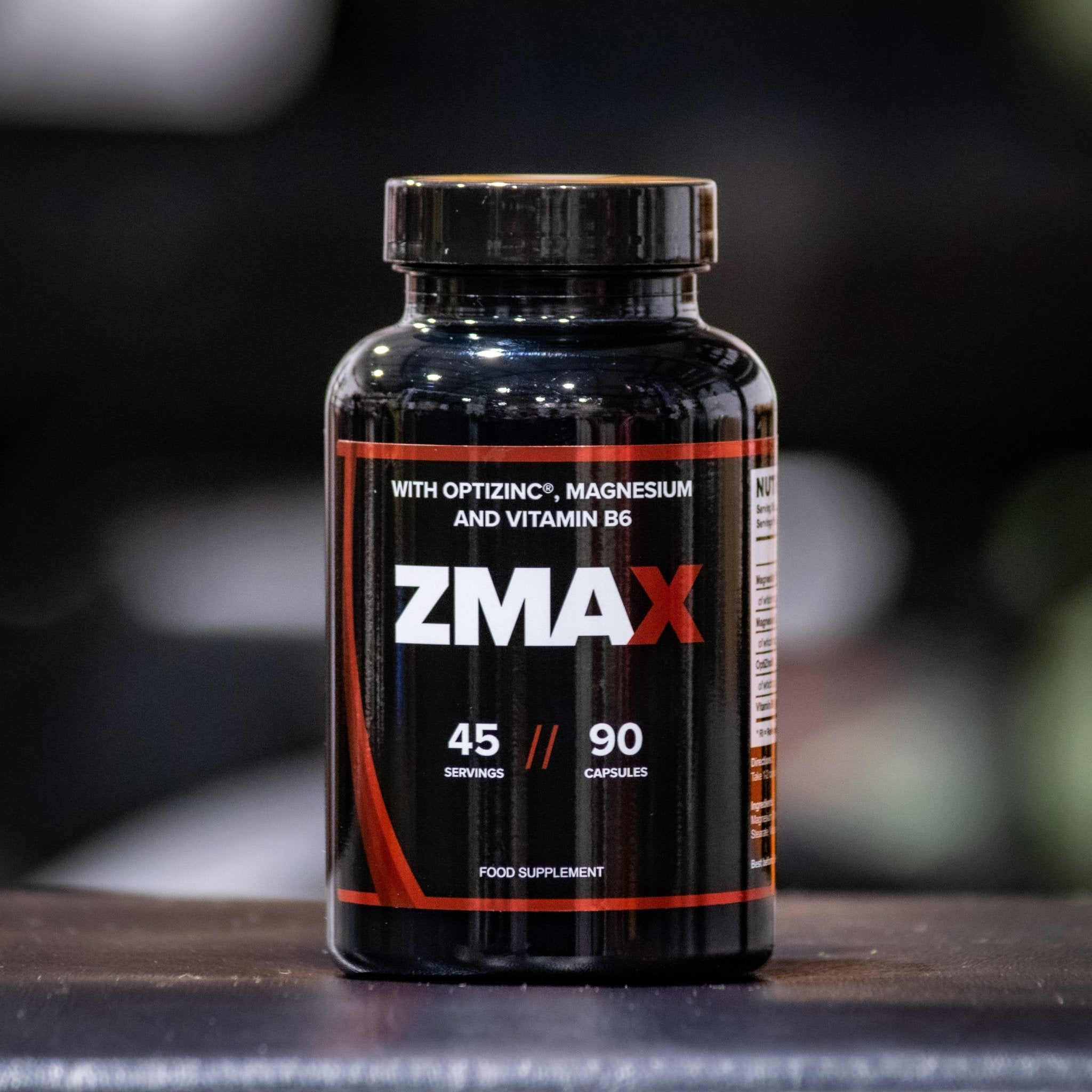
Magnesium, Zinc, B6 Formula That Isn't Just Another ZMA
Most ZMA products are rubbish. Underdosed, cheap forms, and they all pretend to be magic sleep pills. That's not what we've done, nor claim to do here.
ZMAX is a proper recovery and health support product working supporting nutritional Zinc and Magnesium meaningfully.
ZMAX is a proper recovery and health support product working supporting nutritional Zinc and Magnesium meaningfully.
-
Built with two magnesium forms chosen for unique functions into the body to ensure good magnesium absorption through the gut and stimulate higher brain magnesium uptake.
-
A patented zinc chelate, OptiZinc®, with proven tissue retention.
- And a nutritional B6 dose to ensure the zinc and magneisum are properly utilised once absorbed.

The Strom ZMAX Formula
Each bottle of ZMAX includes 45 servings (90 capsules).
Per 2-capsule serving:
Per 2-capsule serving:
- Magnesium L-Threonate (800mg ~72mg elemental Mg), elevates brain Mg via GLUT pathway
- Magnesium Bisglycinate (400mg~72mg elemental Mg), high yield, low GI impact
- OptiZinc® (Zinc Monomethionine) (170mg ~30mg elemental Zn), high-retention chelate
- Vitamin B6 (Pyridoxine) (8mg) Cofactor for Mg/Zn utilisation
What is ZMAX for?
ZMAX addresses three areas that hard-training athletes chronically under-serve: neurological recovery, systemic mineral repletion, and cardiovascular/immune support. Magnesium and zinc are the two minerals most commonly depleted by intense exercise, sweating, caloric restriction, and stress, which are the conditions most of our Strom Community live in every day. The B6 is to ensure they can do their job.
Magnesium L-Threonate: Driving Neuronal Mg Uptake
With most magnesium supplements: you take them, your serum magnesium rises, some of that magnesium slowly equilibrates across the blood-brain barrier into cerebrospinal fluid, but your neurons barely receive an increase. Free magnesium can reach the fluid surrounding the brain, but neurons do not actively pull it in unless in a notable depletion condition as there is no push to do so. Additional signal is needed to tell them to accumulate beyond normal baseline, brain magnesium levels stay largely unchanged even when blood levels improve.
In 2010, researchers at MIT set out to solve this around a simple observation: L-threonate, a vitamin C metabolite, is already present in cerebrospinal fluid, which means the brain recognises it and has existing transport infrastructure to handle it. Through that they may be able to leverage it to co-transport the magnesium across alongside. It was on this basis that Magnesium Threonate was proposed, thinking that the threonate component may act as a carrier for transport. This turned out not to be the case, but Magnesium L-threonate has proven value in another manner.
In 2016 it was shown that the Magnesium and L-threonate dissociates after ingestion, just like all mineral salts, the magnesium going one way and the L-threonate going another. From there, the two components follow independent paths that converge at the same destination. Free magnesium enters serum and slowly equilibrates across the blood-brain barrier into cerebrospinal fluid, but at a rate too slow to meaningfully raise neuronal levels on its own, as other common magnesium forms. Meanwhile, L-threonate crosses the BBB independently and acts on neuronal glucose transporters (GLUTs), signalling neurons to actively pull magnesium in. It is not carrying magnesium across the barrier; it is telling neurons to accumulate it. When the same experiment was run with citrate, gluconate, and other common magnesium anions, none of them triggered the same uptake signal, which is why those forms raise serum magnesium without raising brain magnesium in normal nutrition conditions.
The downstream effects confirmed the mechanism was real: upregulated NR2B-containing NMDA receptors, increased mitochondrial membrane potential, and higher functional synapse density — all confirmed in human neural stem cell-derived neurons.
In 2010, researchers at MIT set out to solve this around a simple observation: L-threonate, a vitamin C metabolite, is already present in cerebrospinal fluid, which means the brain recognises it and has existing transport infrastructure to handle it. Through that they may be able to leverage it to co-transport the magnesium across alongside. It was on this basis that Magnesium Threonate was proposed, thinking that the threonate component may act as a carrier for transport. This turned out not to be the case, but Magnesium L-threonate has proven value in another manner.
In 2016 it was shown that the Magnesium and L-threonate dissociates after ingestion, just like all mineral salts, the magnesium going one way and the L-threonate going another. From there, the two components follow independent paths that converge at the same destination. Free magnesium enters serum and slowly equilibrates across the blood-brain barrier into cerebrospinal fluid, but at a rate too slow to meaningfully raise neuronal levels on its own, as other common magnesium forms. Meanwhile, L-threonate crosses the BBB independently and acts on neuronal glucose transporters (GLUTs), signalling neurons to actively pull magnesium in. It is not carrying magnesium across the barrier; it is telling neurons to accumulate it. When the same experiment was run with citrate, gluconate, and other common magnesium anions, none of them triggered the same uptake signal, which is why those forms raise serum magnesium without raising brain magnesium in normal nutrition conditions.
The downstream effects confirmed the mechanism was real: upregulated NR2B-containing NMDA receptors, increased mitochondrial membrane potential, and higher functional synapse density — all confirmed in human neural stem cell-derived neurons.
Since development, six human trials have been completed on Magnesium L-threonate. The most recent in 2026, a double-blind, placebo-controlled trial with 100 adults aged 18 to 45 over six weeks. The Magnesium L-threonate group showed improvements across overall cognition, with the largest effects appearing in working memory and episodic memory (long term "what", "when", and "where" memory) . Reaction time improved, and estimated brain cognitive age dropped 7.5 years relative to placebo. On the autonomic side, resting heart rate decreased while heart rate variability increased, and self-reported sleep impairment improved.
Important to note, objective sleep duration did not change. Our Strom Community consistently report better sleep on Magnesium L-threonate, and the 2026 study suggests this may be quality rather than total time based. Better nervous system recovery during the hours they do sleep, not more hours asleep. Hard training pushes both of those markers in the wrong direction, and now we have data showing Magnesium L-threonate pushes them back.
Important to note, objective sleep duration did not change. Our Strom Community consistently report better sleep on Magnesium L-threonate, and the 2026 study suggests this may be quality rather than total time based. Better nervous system recovery during the hours they do sleep, not more hours asleep. Hard training pushes both of those markers in the wrong direction, and now we have data showing Magnesium L-threonate pushes them back.

Magnesium Bisglycinate: High Yield, Quiet on the Gut
Magnesium bisglycinate often gets a lot of sleep credit, but the real wins are about getting into systemic circulation efficiently AND most notably without the digestive consequences that make many common magnesium forms impractical for daily use.
Magnesium bisglycinate is magnesium chelated to two glycine molecules, forming a small, stable complex that the body can absorb through two distinct pathways. As early as 1994 superior bioavailability of magnesium bisglycinate over oxide has been demonstrated, consistent with the known dual-absorption model: some portion of the intact chelate absorbs through PepT1 dipeptide transporters in the proximal small intestine. These are the same transporters that handle dietary dipeptides, while the remainder dissociates in the gut, freeing the magnesium to absorb through conventional mineral channels. Once either pathway delivers magnesium past the intestinal wall, the chelate dissociates in portal blood, releasing free Mg²⁺ and free glycine into systemic circulation. The chelation geometry determines how the mineral gets past the gut wall, not what form it reaches tissues in — but having two absorption routes means a better overall yield than simple salts.
Magnesium bisglycinate is magnesium chelated to two glycine molecules, forming a small, stable complex that the body can absorb through two distinct pathways. As early as 1994 superior bioavailability of magnesium bisglycinate over oxide has been demonstrated, consistent with the known dual-absorption model: some portion of the intact chelate absorbs through PepT1 dipeptide transporters in the proximal small intestine. These are the same transporters that handle dietary dipeptides, while the remainder dissociates in the gut, freeing the magnesium to absorb through conventional mineral channels. Once either pathway delivers magnesium past the intestinal wall, the chelate dissociates in portal blood, releasing free Mg²⁺ and free glycine into systemic circulation. The chelation geometry determines how the mineral gets past the gut wall, not what form it reaches tissues in — but having two absorption routes means a better overall yield than simple salts.

The practical advantage, beyond absorption numbers, is what bisglycinate does not do. Common magnesium salts like oxide, citrate, and carbonate draw water into the intestines, producing the laxative effect that is often associated with magnesium supplementation. During prep, travel, or when the gut is already stressed from training, orals, or dietary extremes, bisglycinate provides a separate uptake path to sidestep this problem.
The glycine released after dissociation is doing its own work as well. It is an inhibitory neurotransmitter and a glutathione precursor, and evening glycine intake has been associated with improved sleep quality in separate research, which means bisglycinate delivers both magnesium repletion and a calming amino acid from the same molecule. It should just be acknowledged that higher doses would be expected for particularly noticeable effects, this is why we also have Glycine as a standalone supplement also, this would be viewed as a contribution not a full dose.
The glycine released after dissociation is doing its own work as well. It is an inhibitory neurotransmitter and a glutathione precursor, and evening glycine intake has been associated with improved sleep quality in separate research, which means bisglycinate delivers both magnesium repletion and a calming amino acid from the same molecule. It should just be acknowledged that higher doses would be expected for particularly noticeable effects, this is why we also have Glycine as a standalone supplement also, this would be viewed as a contribution not a full dose.
OptiZinc®: Where the Zinc Actually Goes
Most zinc forms absorb adequately when tested in isolation, but in real-world conditions phytates from grains, dietary fibre, calcium, and iron all compete for the same mineral transport channels. Under those conditions, much of the zinc you swallow never reaches target tissue.
OptiZinc® is zinc monomethionine, a 1:1 chelate with L-methionine that routes absorption through amino acid transporters instead of mineral channels, sidestepping much of that competition. Spears (1989) showed that this produces higher tissue retention and lower urinary excretion than zinc oxide, with plasma zinc remaining elevated at both 12 and 24 hours post-dose. The zinc stays in circulation long enough to be incorporated into functional proteins rather than excreted.
Zinc and Cardiovascular Protection
A primary contributor of cardiovascular disease begins where oxidative stress outpaces the body's ability to contain it, and the inflammatory cascade follows from there. For the primary sports for our Strom Community: Strength, Bodybuilding, and Combat athletes, and particularly those using PEDs oxidative load runs chronically high while the systems meant to manage it are often the least supported.
Zinc sits at the front of that defensive chain, with two mechanisms that matter most for this context. First, zinc drives metallothionein production, which enables superoxide dismutase (SOD) to neutralise reactive oxygen species before they cause structural damage. Second, it activates PPAR-α and PPAR-γ receptors, upregulating antioxidant gene expression while simultaneously downregulating NF-κB, the master switch for inflammatory cytokine production including TNF-α, IL-6, and IL-1β.
The pathway is sequential: oxidative load activates NF-κB, which drives inflammatory cytokines, which produce chronic inflammation, which damages cardiovascular tissue over time. Zinc intervenes by reducing the oxidative burden at the front of that chain, before the cascade begins.
OptiZinc® is zinc monomethionine, a 1:1 chelate with L-methionine that routes absorption through amino acid transporters instead of mineral channels, sidestepping much of that competition. Spears (1989) showed that this produces higher tissue retention and lower urinary excretion than zinc oxide, with plasma zinc remaining elevated at both 12 and 24 hours post-dose. The zinc stays in circulation long enough to be incorporated into functional proteins rather than excreted.
Zinc and Cardiovascular Protection
A primary contributor of cardiovascular disease begins where oxidative stress outpaces the body's ability to contain it, and the inflammatory cascade follows from there. For the primary sports for our Strom Community: Strength, Bodybuilding, and Combat athletes, and particularly those using PEDs oxidative load runs chronically high while the systems meant to manage it are often the least supported.
Zinc sits at the front of that defensive chain, with two mechanisms that matter most for this context. First, zinc drives metallothionein production, which enables superoxide dismutase (SOD) to neutralise reactive oxygen species before they cause structural damage. Second, it activates PPAR-α and PPAR-γ receptors, upregulating antioxidant gene expression while simultaneously downregulating NF-κB, the master switch for inflammatory cytokine production including TNF-α, IL-6, and IL-1β.
The pathway is sequential: oxidative load activates NF-κB, which drives inflammatory cytokines, which produce chronic inflammation, which damages cardiovascular tissue over time. Zinc intervenes by reducing the oxidative burden at the front of that chain, before the cascade begins.

The 2018 review by Choi et al. provides a valuable consolidation the evidence across multiple studies. In this we can see low serum zinc associates with increased cardiovascular mortality, and supplementation reduces atherosclerosis risk while protecting against ischemia/reperfusion injury. Anabolics and other factors in bodybuilding and powerlifting particularly, further challenge cardiovascular health through altered lipids, arterial stiffness, left ventricular hypertrophy, and elevated inflammatory markers. Zinc does not reverse these, but it supports the body systems that are working against them.
At 30mg, ZMAX provides meaningful zinc correction without crossing into copper interference, which begins to emerge above 50mg/day with chronic use. The methionine chelation in OptiZinc® further reduces competitive absorption dynamics compared to cheaper zinc forms.
At 30mg, ZMAX provides meaningful zinc correction without crossing into copper interference, which begins to emerge above 50mg/day with chronic use. The methionine chelation in OptiZinc® further reduces competitive absorption dynamics compared to cheaper zinc forms.

NUTRITIONAL DOSING OF VITAMIN B6
8mg pyridoxine, the precursor to active Vitamin B6. This is the cofactor that ensures the other three ingredients can do their jobs, without adequate B6, both magnesium and zinc stall at the point of cellular utilisation.
Vitamin B6 in its active form, pyridoxal 5'-phosphate (PLP), acts as a transport cofactor across four enzymatic pathways that directly determine how well the minerals in this formula function.
Vitamin B6 in its active form, pyridoxal 5'-phosphate (PLP), acts as a transport cofactor across four enzymatic pathways that directly determine how well the minerals in this formula function.
- It supports magnesium transport through TRPM6/7 channels, which move magnesium from extracellular fluid into the cell; without adequate B6, magnesium can be present in circulation and still fail to reach intracellular targets.
- It feeds the transsulfuration pathway, the chain that builds the raw material for zinc's antioxidant machinery.
- It also drives aromatic amino acid decarboxylase (AADC), which converts L-DOPA and 5-HTP into dopamine and serotonin respectively.
- It powers glutamic acid decarboxylase (GAD), which converts excitatory glutamate into inhibitory GABA, shifting neural tone toward calm.

Adequate Vitamin B6 is the reason magnesium gets into cells, zinc gets built into functional enzymes, and the nervous system produces the neurotransmitters that underpin mood, motivation, and sleep architecture. Not a glamourous ingredient but the one that makes the headlines possible.
For B6 dosing for prolactin management, see our 100mg P5P capsules. For the full breakdown of how P5P works at higher doses for prolactin management, see the P5P article. P-5-P - High Dose Vitamin B6
For B6 dosing for prolactin management, see our 100mg P5P capsules. For the full breakdown of how P5P works at higher doses for prolactin management, see the P5P article. P-5-P - High Dose Vitamin B6
HOW TO TAKE ZMAX
1 to 2 capsules before bed is ideal, though daytime works as well. With or without food, it will absorb well either way.
F.A.Q.
What is the difference between ZMAX and standard ZMA?
Standard ZMA uses magnesium aspartate and zinc aspartate, these are cheaper forms with no particular absorption advantage. ZMAX uses Magnesium L-threonate, bisglycinate, and OptiZinc®, each chosen for a distinct mechanism that the standard forms do not offer.
Can I take ZMAX year-round or do I need to cycle it?
Yes. These are essential minerals with daily requirements, not compounds that need cycling. Mineral status drops fast when intake stops, which is why consistent daily use matters more than loading protocols.
Will 30mg zinc deplete copper levels?
Safe long-term. Copper competition begins to emerge above 50mg/day with chronic use, and the methionine chelation in OptiZinc® reduces gut-level competition further by routing through amino acid transporters rather than shared mineral channels.
Can I take ZMAX if I already take MultiMAX?
MultiMAX contains 3.5mg zinc and no Magnesium L-threonate. ZMAX is the complement to a daytime multi, not a duplicate of what is already in it.
Does ZMAX help with sleep?
ZMAX is not a sedative. It supports the physiological conditions for better sleep quality through targetting beyond baseline magnesium in neurons for and nervous system recovery, lower resting heart rate, higher HRV, GABA production, and glycine release. It builds over days rather than hitting on the first dose.
Is magnesium L-threonate better than regular magnesium for the brain?
Most magnesium forms raise serum levels without meaningfully raising brain levels, because free magnesium crosses the blood-brain barrier slowly and neurons do not accumulate beyond baseline it without a signal to do so. Magnesium L-threonate provides that signal through L-threonate acting on neuronal transporters, and it is the only form with six human trials, consistent preclinical evidence demonstrating this specific pathway.
REFRENCE MATERIAL
-
Slutsky I, Abumaria N, Wu LJ, et al. Enhancement of learning and memory by elevating brain magnesium. Neuron. 2010;65(2):165-177. DOI: 10.1016/j.neuron.2009.12.026
-
Zhang C, Hu Q, Li S, et al. A Magtein, Magnesium L-Threonate, -Based Formula Improves Brain Cognitive Functions in Healthy Chinese Adults. Nutrients. 2022;14(24):5235. DOI: 10.3390/nu14245235
-
Li W, Yu J, Liu Y, et al. Elevation of brain magnesium prevents synaptic loss and reverses cognitive deficits in Alzheimer's disease mouse model. Molecular Brain. 2014;7:65. DOI: 10.1186/s13041-014-0065-y
-
Sun Q, Weinger JG, Mao F, Liu G. Regulation of structural and functional synapse density by L-threonate through modulation of intraneuronal magnesium concentration. Neuropharmacology. 2016;108:426-439. DOI: 10.1016/j.neuropharm.2016.05.006
-
Liu G, Weinger JG, Lu ZL, Xue F, Sadeghpour S. Efficacy and Safety of MMFS-01, a Synapse Density Enhancer, for Treating Cognitive Impairment in Older Adults: A Randomized, Double-Blind, Placebo-Controlled Trial. J Alzheimers Dis. 2016;49(4):971-990. DOI: 10.3233/JAD-150538
-
Lopresti AL, Smith SJ. The effects of magnesium L-threonate (Magtein) on cognitive performance and sleep quality in adults: a randomised, double-blind, placebo-controlled trial. Front Nutr. 2026;12:1729164. DOI: 10.3389/fnut.2025.1729164
-
Schuette SA, Lashner BA, Janghorbani M. Bioavailability of magnesium diglycinate vs magnesium oxide in patients with ileal resection. JPEN J Parenter Enteral Nutr. 1994;18(5):430-435. DOI: 10.1177/0148607194018005430
-
Uberti F, Morsanuto V, Ruga S, et al. Study of Magnesium Formulations on Intestinal Cells to Influence Myometrium Cell Relaxation. Nutrients. 2020;12(2):573. DOI: 10.3390/nu12020573
-
Choi S, Liu X, Pan Z. Zinc deficiency and cellular oxidative stress: prognostic implications in cardiovascular diseases. Acta Pharmacol Sin. 2018;39(7):1120-1132. DOI: 10.1038/aps.2018.25
- Nakatani S, Mori K, Shoji T, Emoto
Key learnings on the DIAAS and measuring protein quality